
When we talk about strength and movement, most people think about quads, hamstrings, or just say “glutes” and move on. But sitting on the side of your hip is a muscle that plays a huge role in how confidently and freely you move: the gluteus medius.
This muscle doesn’t ask for attention. But when it stops doing its job, your body makes sure you notice.
Knee pain, shaky balance, awkward strides… many common movement issues trace back to this one muscle.
Learning about the gluteus medius is a simple step toward moving better and unlocking potential you may not even realize is there.
Anatomy: Where the Gluteus Medius Lives
The gluteus medius is one of three main glute muscles. It sits on the outside of your pelvis and is partly covered by the larger gluteus maximus.
It connects:
The pelvis (ilium) to the top of the thigh bone (femur)
Because it links your pelvis to your leg, the gluteus medius plays a big role in how your hips, knees, and ankles work together. Think of it as a key connector that helps your body move as one system.
What the Gluteus Medius Does
The gluteus medius has a few important jobs:
- Hip abduction: Moves your leg away from the center of your body
- Pelvic stability: Keeps your pelvis level when standing on one leg
- Hip rotation: Helps control how your hip rotates as you move
In simple terms, this muscle keeps you steady, aligned, and efficient especially when you’re on one leg.
And spoiler alert: you’re on one leg a lot.
The Gluteus Medius in Walking and Running
Every step you take includes a moment where only one foot is on the ground. During that moment, the gluteus medius on the standing leg fires to keep your pelvis from dropping to the side.
When it’s strong and well-timed, movement feels smooth and controlled. When it’s weak or slow to fire, your body starts to find workarounds.
During walking, the gluteus medius helps:
- Prevent excessive hip drop
- Keep the pelvis level
- Transfer force smoothly through the leg
During running, demands increase:
- Higher impact forces
- Faster loading on one leg
- Greater need for side-to-side (frontal plane) stability
This is why runners with gluteus medius weakness often notice knee pain, hip discomfort, or an inefficient stride.
The Kinetic Chain: Why It Matters Below the Hip
One of the most overlooked jobs of the gluteus medius is how it controls movement down the chain.
When it’s working well, it helps:
- Keep the knee from collapsing inward
- Maintain proper thigh bone (femur) alignment
- Support better ankle and foot control
When it’s not doing its job, the thigh may rotate inward too much. The knee and ankle then have to compensate. Over time, this can contribute to issues like:
- Patellofemoral (kneecap) pain
- IT band irritation
- Achilles tendon stress
- Plantar fascia irritation
The problem may show up far from the hip but the source often starts there.
Common Signs of a Weak Gluteus Medius
A poorly functioning gluteus medius doesn’t always cause hip pain. In fact, it often hides.
You might notice:
- Knee pain during squats, stairs, or running
- Low back tightness or fatigue
- Feeling unstable or wobbly on one leg
- Overuse injuries that keep coming back
These signs are feedback that your body is asking for better support and smarter movement.
Conclusion: Small Muscle, Big Impact
The good news? Once you understand the role of the gluteus medius, you can train it intentionally.
Targeted strength work, balance training, and better movement awareness can dramatically change how you move and how you feel. And this isn’t just about preventing injuries.
It’s about freedom.
Freedom to walk, run, lift, and explore what your body is capable of without hesitation or fear.
By supporting muscles like the gluteus medius, you’re not just fixing mechanics...you’re building trust in your body.
You’re giving yourself the confidence to move freely and explore untapped potential that’s been there all along.
The gluteus medius may not be flashy, but it’s foundational. It stabilizes, protects, and connects your movement from the ground up.
When it’s strong and engaged, your body moves as a coordinated system rather than a collection of compensations. Sometimes the biggest changes come from supporting the muscles that keep you steady every step of the way.
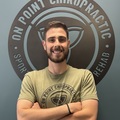
Dr. Ryan A. DiPrimo
Contact Me


