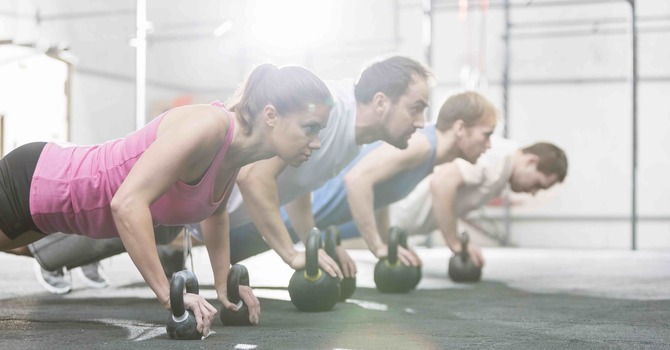
Walk into almost any gym and you'll see people training muscles. Chest day. Leg day. Back day. Arm day.
Those workouts can absolutely make you stronger.
But golf doesn't ask your body to use one muscle at a time. It asks your whole body to work together.
That's why golf fitness training should look different than bodybuilding workouts.
The goal isn't to build bigger muscles that just get in the way of your golf swing. It's to build a body that can rotate well, create power, stay balanced, and repeat that same swing from the first tee to the 18th green.
Golf Is a Movement Sport
A golf swing lasts about one second.
In that short time, your body performs one of the most coordinated movements in sports.
Pressure moves through your feet, your hips begin to rotate, your torso follows, your arms speed up... then the club reaches its fastest point right before impact.
Each part depends on the one before it.
When one area can't do its job, another part of your body usually works harder to make up for it. That's often when your swing becomes less consistent and your body starts feeling it.
Building strength matters. But in golf, how your body moves together matters even more.
Strength Is Only Part of the Picture
Getting stronger is almost always a good thing.
But strength doesn't automatically lead to a better golf swing.
You can have strong legs but struggle to use the ground to create power.
You can have a strong upper body but not enough mobility to make a full backswing.
Or you can be plenty strong but lack the balance and control to repeat your swing over and over again.
Train The Movements
One of the biggest differences between golf performance training and training for physical appearance is the focus on movement.
Golfers benefit from exercises that teach the body to move the way the game demands.
That means learning how to:
- rotate while staying in posture
- create force from the ground
- stay balanced on one leg
- control unwanted movement
- slow your body down after creating speed
These movement patterns carry over to your golf swing because they match what your body has to do on the course.
Movement-based training gives your strength a job to do.
Don't Forget Deceleration
Most golfers think power is the most important part of the swing.
But being able to slow your body down is just as important.
Every fast swing creates force.
Your hips, core, and surrounding muscles have to absorb that force after impact.
If they can't, your body often puts more stress on your joints and soft tissues. It can also make your swing harder to repeat.
Creating speed is only half the equation...
Controlling that speed is what allows you to do it again and again.
Conclusion
The next time you're in the gym, ask yourself a different question.
Instead of asking,
"What muscle am I training?"
Ask,
"What movement am I improving?"
That small change can completely change how well your workouts carry over to your golf game.
At On Point, movement is always where we start.
As TPI Medical providers, we look at how your body moves before deciding what it needs. From there, every exercise has a purpose because it's built around you, not a generic workout.
Golf is a skill.
But it's also an athletic movement.
The better your body moves, the better chance your swing has to do what you want it to.
Dr. Ryan A. DiPrimo
Contact Me