
Every year in Connecticut, it happens like clockwork…
The weather gets nice, courses open, and golfers are finally back outside doing what they love.
And then… a few rounds in, something else shows up too.
Maybe it's lower back tightness.
Or it's sore hips.
Or some nagging shoulder or elbow discomfort.
Most golfers brush it off. They say:
“I’m just getting back into it.”
“I just need a few more rounds to loosen up.”
There’s some truth to that.
But pain early in the season usually tells a much deeper story.
Pain isn’t the starting point.
It’s the last symptom to show up in a body that isn’t moving well… and it's also the first symtom to go away with treatment.
So by the time you feel it, your body has likely been compensating for a while.
What Happens During the Offseason
During the offseason, most golfers:
• Move less
• Sit more
• Lose mobility
• Lose strength that supports their swing
Then the season starts.
Now you’re walking the course, swinging over and over, rotating at high speeds…
And asking your body to handle all of it right away.
That’s when the cracks start to show.
Pain isn’t the problem.
It’s just the signal that something underneath isn’t working the way it should.
Why the First Few Rounds Hit Different
Golf demands a lot from your body.
You need to:
• Hinge into position
• Hold posture
• Rotate powerfully
• Repeat that motion again and again
If the systems that support that… like your posterior chain and rotational control… aren’t ready, your body finds another way.
That’s where things start to break down.
Instead of rotating through your hips, your lower back picks up the slack.
Instead of staying stable, your swing changes to compensate.
Instead of transferring force efficiently, your arms and shoulders work overtime.
Over time, these small adjustment add up.
And eventually, it shows up as:
• Lower back tightness after a round
• Hips that feel stiff or blocked
• Shoulders or elbows that feel overworked
• A swing that’s harder to repeat
The Mistake Most Golfers Make
When pain shows up, most golfers try to get rid of it fast.
They rest, stretch, use over-the-counter meds, or take a few days off.
Then once it feels better… they get right back out there.
Here’s the problem.
If you only focus on pain, you’re staying at the surface.
Remember… pain is the last thing to show up.
So when it goes away, that doesn’t mean the real issue is gone.
If you don’t fix what caused it… it comes right back.
That’s why so many golfers get stuck in the same cycle:
Play → hurt → rest → feel better → repeat
What Your Body Is Actually Telling You
Instead of trying to push through it or shut it down, start looking at pain as feedback.
Your body is telling you something isn’t:
• Moving well
• Stabilizing well
• Transferring force the way it should
For some golfers, it’s limited hip mobility.
For others, it’s poor control or posture.
For others, it’s strength that isn’t there when it needs to be.
This is where a movement-based approach makes a difference.
Using systems like the Titleist Performance Institute, you can actually assess how your body moves instead of guessing.
How We Look At It At On Point
At On Point, we don’t chase symptoms.
We look at how your body actually moves.
That means understanding how you:
• Hinge and hold posture
• Rotate through your hips and torso
• Transfer force from the ground
• Control movement through your swing
Then we build a customized plan around that.
Not just to get you out of pain…
But to get you moving better so it stays that way.
Because the goal isn’t just to feel good for a few rounds.
It’s to step onto the course knowing your body can handle it.
That’s what we mean when we say:
We get people to move freely & explore their untapped potential.
The Bottom Line
Feeling sore after your first few rounds is common.
But it’s not something to ignore.
Pain is a signal… not the root cause.
And even if it goes away, the underlying issue is still there, waiting to show up again.
The golfers who stay consistent all season aren't the ones just playing more.
They're the ones who prepared their bodies to handle the game.
When you fix how your body moves… everything else starts to fall into place.
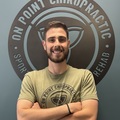
Dr. Ryan A. DiPrimo
Contact Me


